Some Unpleasant Treatment
Harrison G. Rogers,
Jedediah Smith's clerk and second in
command, recorded some unpleasant treatment of the Indians, who he felt were kept in a
state of bondage as complete as slavery. On Sunday, January 14, 1827, four Indians who had been fighting and gambling were sentenced to
thirty to forty lashed on the "bare posteriors". Another time five or six Indians were brought to the mission and ". . . whipped, and one of
them being stubbourn and did not like to submit to the lash was knocked down by the commandant, tied and severely whiped, then chained by
the leg to another Indian who had been guilty of a similiar offence." (15) Rogers also became disgusted when he observed the Sunday
routine. After church, which included music by an Indian band, the priest ordered meat be issued to the Indians. But he then threw oranges
to a cluster of young squaws to see them squabble.
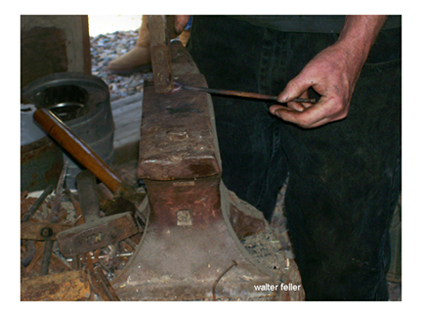
To help earn their keep, some of the trappers worked in the blacksmith shop. At the request of Padre Jose Bernardo Sanchez a bear trap
was made by the Americans and about a week later the priest asked Rogers to make a large trap to set in his "orrange garden, to catch the
Indians in when they come up at night to rob his orchard." (16) Unfortunately for the historian, Rogers neglected to record the statistics
as to how many bears or Indians were subsequently caught.
The Americans left
San Gabriel
and went to the San Joaquin Valley to trap. They crossed the snowy
Sierra Nevada
and the dry deserts to
attend the rendezvous of trappers in Utah in 1827. Within two weeks he was again on his way to the Mohave villages. The Mohave pretended
friendship but were actually bent on retribution for the loss of thirty to fifty warriors at the hands of
Ewing Young
and his band of
trappers a few months before. (17) When the Mohave helped Smith cross the
Colorado River
they suddenly attacked and Smith lost nine of his nineteen men, all of whom were brutally slain. Two Indian squaws traveling with Smith
were held by the Mohave as slaves.
When Young's men returned to the
Colorado River
within the year, a Yuma Indian with the Mohave told him of the Smith massacre and
offered to obtain one of the "beautiful" captives, for an adequate reward of course, but Young declined and kept his dealing
with the Mohave at a minimum. Thus the Indians squaws (wives of the trappers) lived the rest of their lives with the Mohave.
< PREVIOUS - Indian Slave Trade - NEXT >